Chili chicken and a paper crown
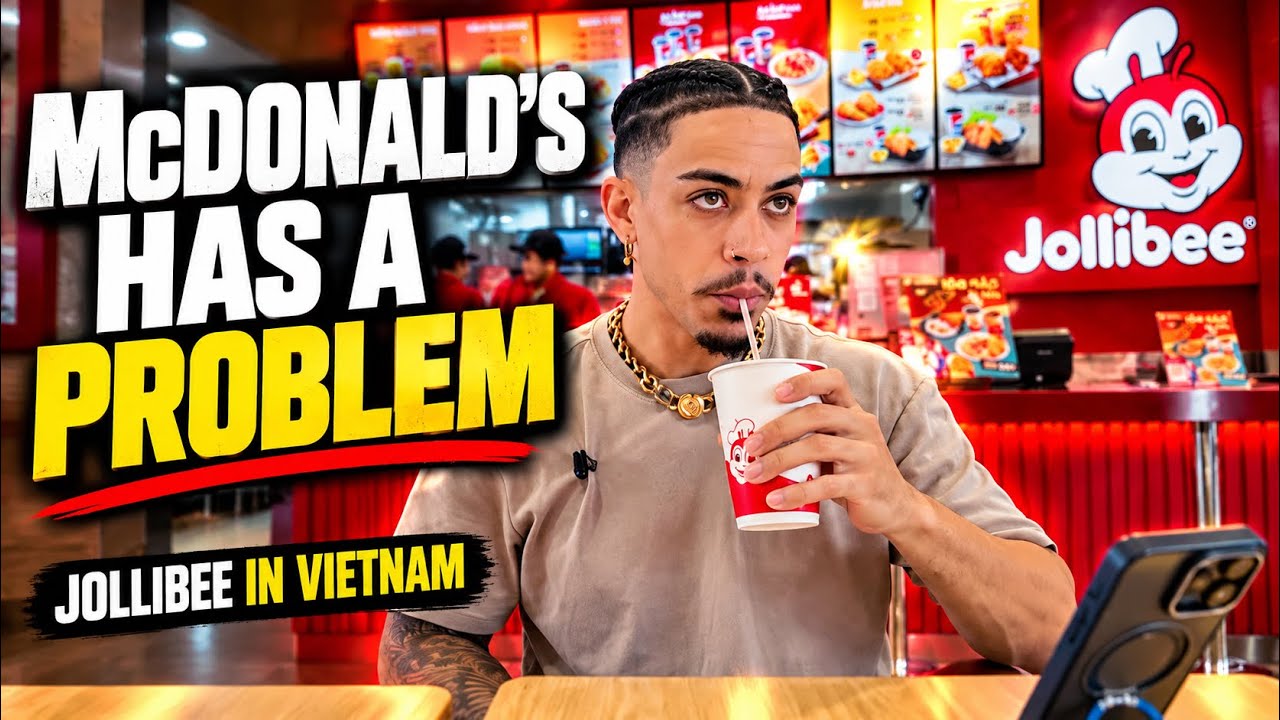
The thing to watch in a Jollibee in Vietnam is the room, not the menu. Families with children, teenagers sharing a table, a birthday with a cake and a paper crown, all of it moving through a fast-food counter in a country with no shortage of extraordinary things to eat on the street.
What that room shows is a business that worked out, in detail, what people were doing when they chose it: sitting down for an hour, in air conditioning, with children, on a budget, in a place that felt predictable.
The company says Euromonitor ranked Jollibee first among Vietnam's fast-food brands by sales value in 2025, on more than 250 stores — not the largest network in the market. So the question was never how it opened restaurants. It was why people came back.
It started with ice cream
Jollibee did not begin as a hamburger company. In 1975 Tony Tan Caktiong's family opened ice cream parlours in the Philippines. Customers kept asking for hot meals, the family followed the demand, and Jollibee took its name in 1978.
That origin matters more than it looks. A company that starts by serving what people asked for, rather than what the founders planned to sell, has already learned the thing that decides whether a chain survives a new market: the original product is rarely the reason people come back.
Reading the room
Jollibee formally established its Vietnam business in 2005, into a market already crowded with international chains and thousands of local options. An imported name was not going to be enough. Vietnamese families had no reason to switch to a Filipino chain unless the chain made sense inside their existing habits.
So the menu was adapted. Chickenjoy and the sweet-style spaghetti stayed; Chili Chicken was developed with Vietnamese tastes in mind. That is localisation done honestly — not abandoning the brand, but making it relevant to the people paying for it.
A popular dish is not a chain
Getting somebody to try a restaurant once is marketing. Getting the same experience to work at the two-hundredth branch, on a Tuesday, at speed, is operations, and it is much harder. Jollibee opened its 200th Vietnam store in Ho Chi Minh City on 12 December 2024 (Jollibee Group; GMA News).
The company also built a commissary in Vietnam that it says can support around 400 stores. Centralised preparation is unglamorous and decisive: it is how a chain keeps the product identical across locations without turning every kitchen into a different restaurant. The hundredth branch is a logistics problem long before it is a food problem.
A localised menu gets people through the door. A system gets them to come back at a branch they have never visited.
What the queue was about
Put the two halves together and the mechanism is visible: make food this market actually wants, then build the machinery to deliver it consistently, at price, in locations that fit into routines. Price, service and marketing still decide plenty, and none of this proves Jollibee wins every customer.
But it explains the queue. Those families were not there to eat Filipino food or Vietnamese food. They were there because the visit would go the way the last one did — and that reliability, repeated across a few hundred branches, is the hardest thing in food to build.