Grand Theft Auto was built to look like the real world. Now, the real world is trying to look like Grand Theft Auto.
America Once Hated Grand Theft Auto. Now It’s Cashing In.
How a video game once considered a threat to American culture became a commercial opportunity for businesses, global brands and an American city.
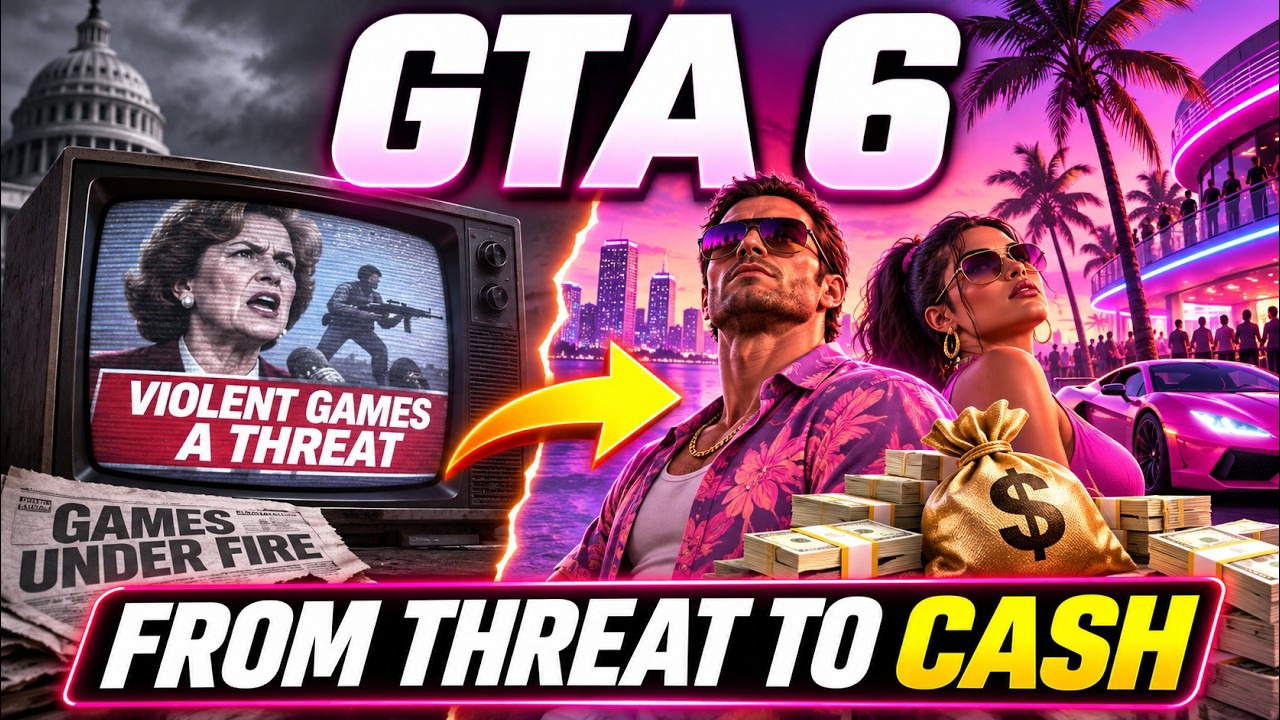
Across Miami, nightclubs have adopted fictional identities, businesses have recreated establishments from the game, and even a professional basketball team has temporarily traded its city’s name for Vice City.
More than two decades ago, Grand Theft Auto was at the center of a national debate about violence and American culture.
Today, becoming part of that same fictional world is a business strategy.
But why are real businesses, billion-dollar brands and even an entire city trying to become part of a fictional world?
When Fiction Becomes More Valuable Than Reality
Most businesses spend years building a name people recognize.
Miami’s E11EVEN temporarily gave its name up for one that was created inside a video game.
On November 6, 2026, the nightclub began operating as NINE1NINE, its fictional counterpart in Grand Theft Auto VI.
Its signage, branding and physical environment were transformed to resemble the establishment players would encounter inside Vice City.
The irony is that Rockstar originally drew inspiration from the real nightclub.
Now, the nightclub is drawing inspiration from Rockstar.
The business is no longer simply selling a night out. It is selling the opportunity to physically experience a world that millions of people recognize.
When an NBA Team Becomes Fictional
The phenomenon extended far beyond Miami’s nightlife.
On November 18, the Miami Heat temporarily adopted a Vice City identity for their game against the Milwaukee Bucks.
The basketball court, uniforms and merchandise were redesigned around the fictional city.
Miami-Dade County also reached a $975,000 agreement involving Vice City advertising on the roof of the Kaseya Center.
For Rockstar, the collaboration brought its fictional universe into American professional sports.
For the Heat, it created a connection with an enormous entertainment audience that extends far beyond basketball.
Both organizations recognized that the cultural value of Grand Theft Auto could be converted into real commercial opportunities.
The Economics of a Fictional City
People have always traveled to places they recognize from entertainment.
Films and television shows have turned otherwise ordinary streets, buildings and neighborhoods into tourist attractions.
Video games introduce another dimension to this relationship.
Rather than simply watching a fictional city, players can spend hundreds of hours exploring it, learning its streets and becoming familiar with its landmarks.
That familiarity can create an emotional connection to a place someone has never physically visited.
Following the release of Grand Theft Auto VI, travel interest in Miami reportedly increased as people looked to experience the real-world inspiration behind Vice City.
For local businesses, this creates an entirely new audience.
A nightclub, restaurant or hotel can become desirable not because of what it offers alone, but because of what it represents inside a fictional universe.
From Public Enemy to Business Partner
The relationship between America and Grand Theft Auto was once considerably different.
During the early 2000s, the franchise became a focal point in debates surrounding violent video games, morality and their potential influence on young people.
Critics questioned whether games like Grand Theft Auto were damaging American culture.
Two decades later, major American institutions are actively associating themselves with the franchise.
The controversy surrounding violent video games has not entirely disappeared. But the commercial and cultural significance of gaming has become increasingly difficult for businesses to ignore.
What was once considered a threat to American culture has become a part of American culture.
The Growing Power of Fictional Worlds
Grand Theft Auto VI demonstrates how entertainment companies can create value beyond the products they originally sell.
Rockstar is not simply selling a video game. It has created a recognizable fictional environment that other businesses can commercially participate in.
Nightclubs can sell experiences. Sports teams can sell merchandise. Cities can attract visitors.
The fictional world becomes a source of economic activity in the physical world.
This represents a shift in where cultural influence comes from and how businesses can profit from it.
For decades, Grand Theft Auto imitated America.
Now, America is imitating Grand Theft Auto.
The Question
As fictional worlds become increasingly influential, will businesses continue using the physical world to inspire entertainment, or will entertainment increasingly determine what the physical world becomes?
Sources & references
- 01
- 02
- 03
- 04
Written by
Eric Snead
Founder
Eric Snead is the founder of Beneath. He reports and films in Vietnam and Thailand, and works on the systems underneath everyday life: visa rules, property contracts, and the retail formats people actually use. Each story is written from his own reporting trips, with the documentary made alongside it. He is based between Southeast Asia and the United States.
More from Eric SneadNewsletter
Stories beneath how places change.
Independent reporting on business, culture, technology, and the forces shaping our world.