America runs on systems most people rarely think about—until they stop working.
How Close Is America to a Complete Shutdown?
Within three days, America’s skies and its banking system both faltered. The failures were unconnected, but they exposed how much of daily life rests on systems most people never see.
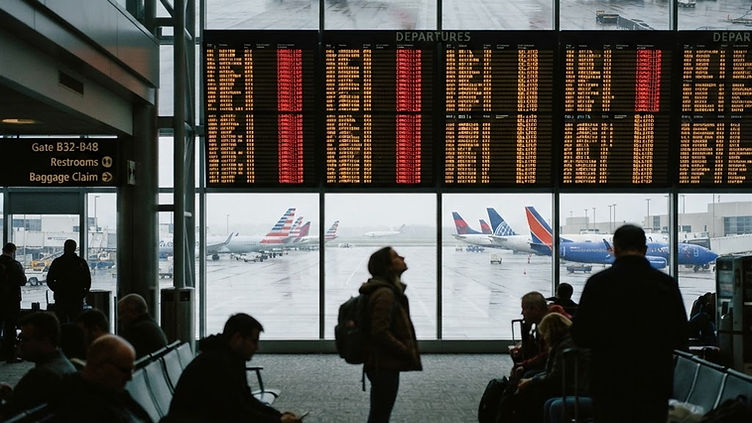
On November 13, the Federal Aviation Administration ordered a nationwide ground stop after technical problems disrupted its communications network. For several hours, departing flights across the country were halted, leaving thousands of travelers dealing with cancellations, delays, and uncertainty.
Just three days later, banking customers experienced another disruption. Problems affecting digital banking and payment transactions prevented some Americans from accessing services they rely on every day.
The incidents were separate, with no established evidence connecting their causes. But together, they revealed something important about modern American life.
A Country Built on Connected Systems
Today, almost everything depends on digital infrastructure.
Airports depend on communication networks. Banks depend on payment processing systems. Businesses depend on both to keep people, money, and goods moving.
And as these systems become more interconnected, individual technical failures can have consequences far beyond the equipment or software that originally malfunctioned.
The FAA incident also exposed concerns about aging infrastructure. Officials linked the disruption to instability in a telecommunications network that supports air traffic operations.
The banking problems revealed a different vulnerability: even routine financial transactions can become temporarily inaccessible when the technology processing them fails.
The Bigger Problem
The concern isn’t necessarily that America is approaching a complete shutdown.
It’s how quickly essential activities can be interrupted when the systems supporting them malfunction.
Technology has made everyday life dramatically more convenient. But that convenience has also created new dependencies.
And when those dependencies fail, the effects can spread through transportation, commerce, and daily life.
The real question isn’t whether technology will fail again. It will.
The question is whether America is building systems resilient enough to keep society functioning when those failures happen.
Written by
Eric Snead
Founder
Eric Snead is the founder of Beneath. He reports and films in Vietnam and Thailand, and works on the systems underneath everyday life: visa rules, property contracts, and the retail formats people actually use. Each story is written from his own reporting trips, with the documentary made alongside it. He is based between Southeast Asia and the United States.
More from Eric SneadNewsletter
Stories beneath how places change.
Independent reporting on business, culture, technology, and the forces shaping our world.