Trump Announced a Huge Deal. Marcos Told a Different Story.
Beneath the Jollibee diplomacy was a much larger negotiation over food, energy and economic influence.
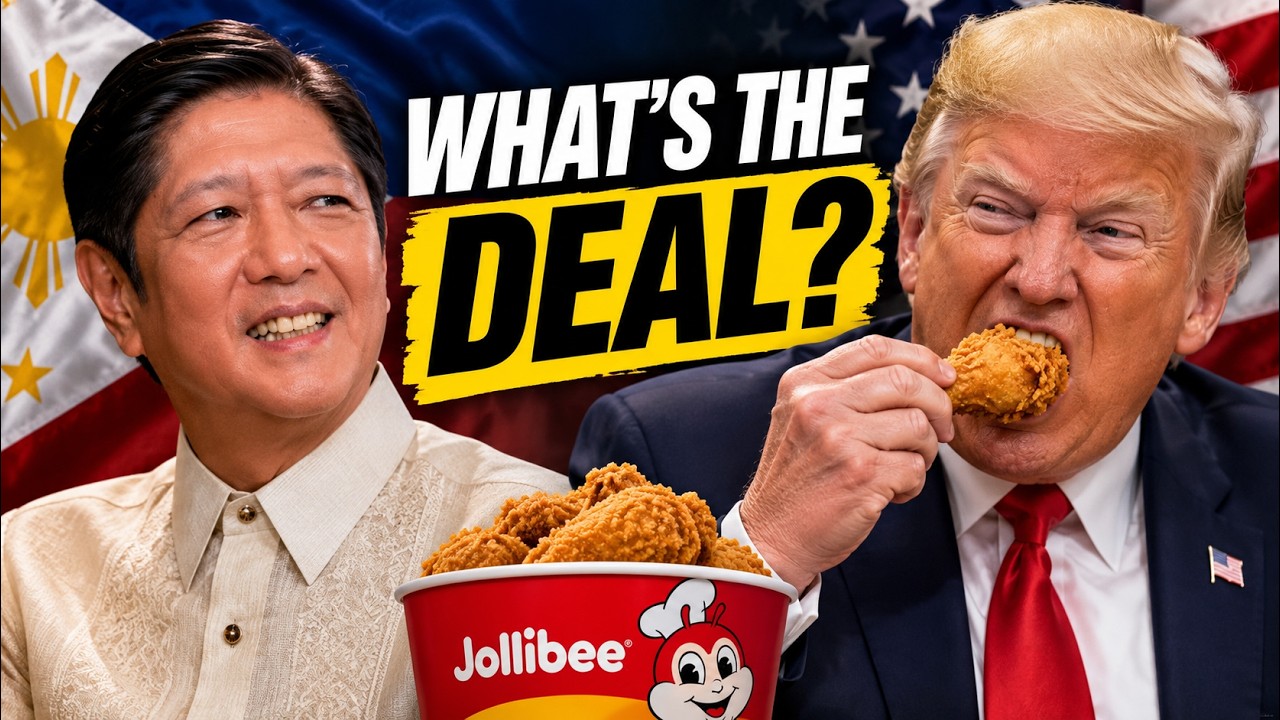
When Donald Trump visited the Philippines in November 2026, President Ferdinand Marcos Jr. arranged for a late-night delivery of Jollibee fried chicken.
It was a small gesture of Filipino hospitality that put one of the country’s most recognizable brands on the international stage.
But behind the friendly exchange, the two countries were discussing something considerably more important than fried chicken: the future of Philippine food and energy imports.
And what the two presidents said about those discussions revealed very different versions of the same negotiation.
Two Presidents, Two Stories
Trump announced that the United States had reached a major trade deal with the Philippines.
He subsequently claimed that the Philippines would purchase all of its agricultural and energy requirements from the United States.
But Philippine officials described the negotiations differently. The Philippine ambassador to Washington confirmed that no agreement had been signed, while Marcos characterized the discussions as an effort to diversify the country’s sources of food and energy.
There is a fundamental difference between purchasing more from a country and becoming entirely dependent on it.
Why America Wants the Deal
For the United States, the Philippines represents a significant market for American agricultural and energy exports.
American farmers benefit from finding more international buyers. American energy companies benefit from securing additional customers.
Increasing Philippine purchases could also help Washington reduce its trade deficit with the country.
From America’s perspective, the economic incentives are clear.
But what works for American producers does not necessarily produce the same benefits for Filipino consumers.
The Economics of Dependency
When a country purchases essential goods from multiple suppliers, it has options.
If one supplier raises prices, experiences a shortage or changes its trading policies, buyers can look elsewhere.
Concentrating those purchases in a single country could reduce that flexibility.
For the Philippines, the consequences of such an arrangement could extend beyond government negotiations. They could influence the cost of electricity, transportation, groceries and agricultural production.
The question is not simply whether American products are affordable today. It is whether the Philippines would retain enough flexibility to respond when prices or political conditions change tomorrow.
More Than a Trade Negotiation
The relationship between the United States and the Philippines extends beyond economics.
The two countries have a longstanding security alliance, and the Philippines occupies a strategically important position in Southeast Asia.
That creates another dimension to their negotiations.
Economic cooperation, diplomatic relationships and national security can influence one another. A country’s negotiating position is shaped not only by what it wants to buy or sell, but also by what it needs from its international partners.
Who Actually Benefits?
Greater access to American food and energy could benefit the Philippines if it creates more competition, improves supply reliability and reduces costs.
It could also benefit American producers by expanding their customer base.
But those benefits depend on the actual terms of the agreement, not the announcements surrounding it.
As of November 22, 2026, the public statements from Washington and Manila did not establish that the Philippines had formally agreed to purchase all its agricultural and energy requirements from America.
Until the terms are established, declaring either country the winner would be premature.
Beneath the Headlines
The Jollibee delivery was a display of hospitality and national pride.
The negotiations surrounding it were a reminder that international relationships are also shaped by economic interests, strategic needs and negotiating power.
The most important part of any trade agreement is not how confidently it is announced.
It is what each country gains, what it gives up and what choices it has left afterward.
The Question
When a smaller country negotiates with a global superpower, where is the line between economic cooperation and economic dependency?
Written by
Eric Snead
Founder
Eric Snead is the founder of Beneath. He reports and films in Vietnam and Thailand, and works on the systems underneath everyday life: visa rules, property contracts, and the retail formats people actually use. Each story is written from his own reporting trips, with the documentary made alongside it. He is based between Southeast Asia and the United States.
More from Eric SneadNewsletter
Stories beneath how places change.
Independent reporting on business, culture, technology, and the forces shaping our world.